📅 Content updated on: 14/04/2020
What is the lens of a laser cutting machine? How much does a fiber laser lens cost? Which is better, fixed focus or variable focus in a laser engraving and cutting module? One of the main parts of a laser, Lens Laser cutting machine The most sensitive and at the same time most important part of the laser device is Laser machine lens This article will answer some of your questions, including: How to install a laser device lens How is it? Adjusting the laser device lens What impact does it have on the quality of work? Task Laser cutting machine lens What is it? The answer is given. Join us to help you choose and buy. Laser machine lens We will guide you accordingly. We will also provide you with Types of laser devices We introduce.
Lens Non-metal laser machine Lenses are specialized optical components used in laser cutting systems for processing non-metallic materials such as plastics, wood, fabrics, and composites. These lenses focus the laser beam to achieve precise cuts and engravings on a variety of non-metallic surfaces. Here are some key points about non-metallic laser lenses:
What is the lens of a laser cutting machine and what is its function?
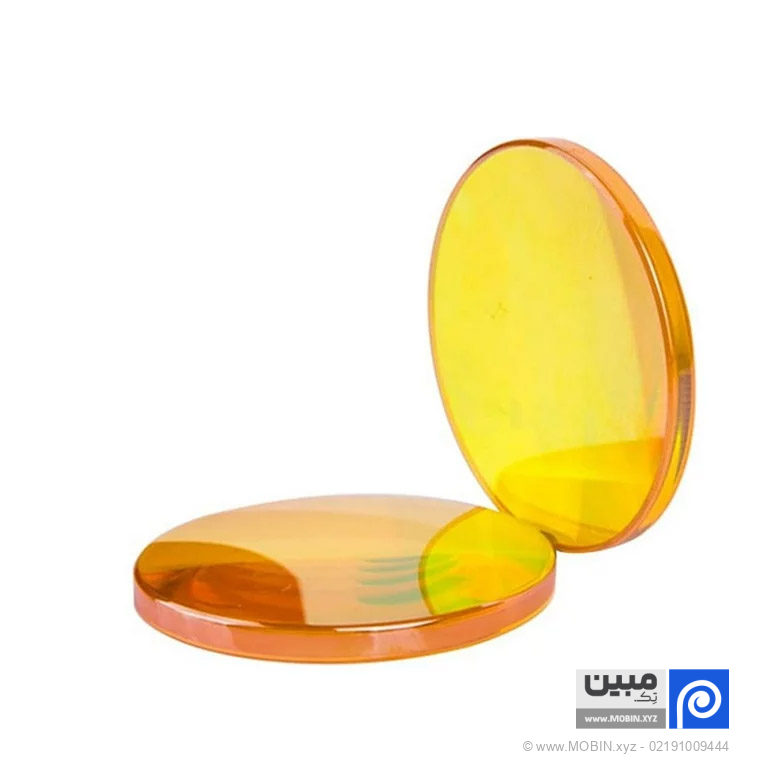
Laser machine lens It is a very important part of the spare parts of the laser machine. Today we want to talk about one of the components of the laser cutting machine. The task of this part is to focus the rays emitted from the laser tube at a specific point. The lens of the laser cutting machine is a combination of two types of convex and concave lenses. The lenses of the laser machine have different focuses. The quality of the lens you use is very important for the result of the work. Ask Mobin Tek for the sale of all kinds of quality laser machine lenses, made of the highest quality materials and with the highest efficiency. We have always set aside the best for you. With us you can experience the best.
Introduction to collimating lenses (laser tube lenses)
Collimating lenses are a type of convex lens. This type of lens is used at the output of a laser generator (Laser tube) is placed. The efficiency of this lens is in focusing and aligning the laser beam. That is, the beam enters the lens of the laser cutting machine in a divergent form and exits it in a parallel form. The beam enters the crystal of the head through the optical fiber in an irregular form. But after entering the collimator and protective lenses, the beam exits the head in a cylindrical form. This lens only smoothes the output of irregular beams. The output beam in the CO2 machine passes through the collimating lens. Upon entering the focal lens, it is focused at a point and exits the head.

Introduction to focusing lenses (gun lenses or laser heads)
Focal lenses are used right after collimating lenses in CO2 and fiber lasers. These lenses direct the laser output beam to a convergent point for cutting and engraving. It is good to know that this point is at its most convergent and usually comes out of the lens with a standard size. Of course, the size of the output spot is variable and adjustable depending on the type of work by the operator and the set power.
From now on, the lens of the laser device is the focusing lens.
Types of laser device lenses
- CO2 laser lenses:
- Gender: They are usually made of ZnSe (zinc selenide), which is transparent to the infrared wavelengths used in CO2 lasers.
- Wavelength: CO2 lasers are designed for a wavelength of 10.6 micrometers.
- Applications: They are commonly used for cutting and engraving non-metallic materials such as acrylic, wood, leather, and paper.
- Fiber laser lenses:
- Gender: They are often made of fused silica or BK7 glass, which are transparent to the wavelengths used in fiber lasers.
- Wavelength: They are designed for wavelengths of about 1 micrometer.
- Applications: They are used for precise marking and cutting of plastics, ceramics, and other non-metallic materials.
Technical introduction to the laser device lens
- Focal length:
- It determines the focus point and intensity of the laser beam.
- A shorter focal length provides a smaller focal spot for finer details.
- A longer focal length allows for deeper cuts and better focus on thicker materials.
- Cover:
- Anti-reflective coatings are applied to minimize reflective losses and protect the lens surface.
- Special coatings are matched to the laser wavelength to provide better performance.
- Lens quality:
- High-quality lenses provide better beam focusing, resulting in cleaner cuts and engravings.
- Poor quality or damaged lenses can cause beam deflection and reduce cut quality.
- Internal components:
- The laser lens is made up of a combination of two convex and concave lenses. These two lenses have different diameters. They have different focal lengths and different colors. Lenses with a diameter of 2.5 cm are more suitable for metal laser machines. Lenses with a diameter of 2 cm are used for non-metal laser cutting machines.
Maintenance and care of the laser device lens
- Cleaning:
- Regular cleaning with appropriate solvents and non-abrasive wipes is essential to maintain lens clarity and performance.
- Contamination on the lens can absorb laser energy, leading to damage and reduced efficiency.
- How to manipulate:
- Lenses should be handled carefully to avoid scratches and physical damage.
- Use gloves or special tools when handling the lens to prevent oils and dust from transferring to its surface.
Applications of laser device lenses
- Cutting: Non-metallic laser lenses are ideal for cutting complex shapes and patterns in materials such as wood, acrylic, and fabric.
- Engraving: Suitable for precise engraving on various non-metallic surfaces, which are very popular in the sign, arts and crafts industries.
- Branding: Precise marking on plastics and ceramics, which is widely used in product labeling and tracking.
Types of laser device lenses in terms of application
- Lens 1٤5 Inch laser machine: Used for graphic designs with a thickness of less than 6 mm.
- Lens 2 Inch laser machine: It is also used for graphic designs with medium details. For example, it is suitable for acrylic less than 8 mm and for wood less than 12 mm thick.
- Laser machine lens 2٤5 Inch: It is worth noting that this type of lens is very common in this size. The 2.5 inch lens in the laser industry has high power and very good quality. Other types of lens sizes include the 3.2 inch CO2 laser lens, the 3.75 inch CO2 laser lens, and the 4 inch CO2 laser lens with a cutting thickness of thick materials up to 1 inch (25.4mm).
Determine the focal length of the current lens of the laser device.
There are a few practical methods you can use to determine the focal length of your laser device's current lens. Here is a step-by-step guide to help you accurately identify the focal length:
1. Manufacturer information
- Review of documentation: First, look at the manual or any other documentation that came with the laser device. The focal length is often specified there.
- Model Number: Sometimes, the focal length is listed on the lens itself, or you can identify it using the model number and refer to the manufacturer's specifications.
2. Visual inspection
- Markings on the lens: Check the lens for any markings or engravings that may indicate the focal length. This is usually indicated in millimeters (for example, “50.8 mm” for a 2-inch focal length).
3. Practical measurement method
If the focal length is not provided or you need to verify it, you can take a practical measurement using the laser device itself.
Required materials:
- A piece of paper or flat surface that can be marked.
- A ruler or measuring tape.
- Safety equipment (safety glasses specific to laser wavelength).
Steps:
- Laser setup:
- Place the laser device on a stable surface.
- Make sure the laser is firmly and correctly aligned.
- Laser beam radiation:
- Turn on the laser and point it at the paper or flat surface.
- Finding the focal point:
- Move the paper or surface closer and further away from the lens to find the point where the laser beam forms the smallest and sharpest spot. This is the focal point.
- Distance measurement:
- Measure the distance from the center of the lens to the paper or surface on which the focal point is formed.
- This distance is the focal length of the lens.
4. Using the laser pointer method
Steps:
- Laser preparation:
- Place the laser in a fixed position so that it points straight ahead.
- Moving the page or paper:
- Place a plate or piece of paper in front of the laser and move it back and forth.
- Identifying the smallest point:
- Adjust the position of the screen so that the laser beam forms the smallest spot. This is the focus of the beam.
- Distance measurement:
- Measure the distance from the lens to the screen or paper. This distance is the focal length.
5. Using a confocal light source
If you have a confocal light source (like another laser pointer):
- Confocal beam guidance:
- Direct the confocal light through the lens.
- Finding the convergence point:
- Observe where the light converges to a point and measure the distance from the lens to this point of convergence.
Color coding in laser lenses
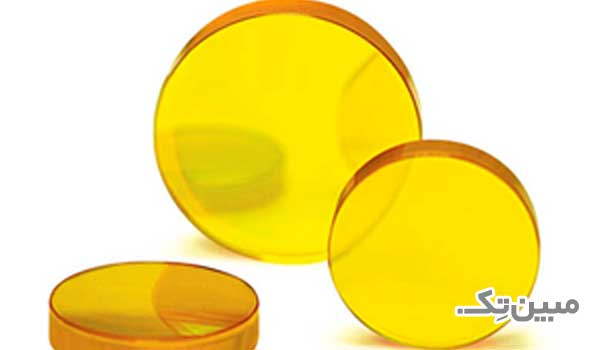
Laser cutting machine lens It is available in two colors: gold and silver. In the gold lens, you can easily see the other side of the lens. In the silver or black lens, which are like a mirror, you cannot see the other side. The black lens has less reflection than the gold lens. It is good to know that the reflection of light and its return into the laser tube reduces the life of the laser tube.
How do we know if a laser lens is safe?
If the laser lens is intact, you can turn on a lamp in the room. Then we place the lens of the laser device between the lamp light and a surface. So that we can see the lamp as clearly as possible on the surface. If we can see the lamp on the surface, then the lens is intact. But if the lens is broken, cracked, or defective, this method will not work.
Safety tip
Always wear appropriate safety glasses when performing any measurements involving laser devices to protect your eyes from possible injury.
By following these steps, you should be able to correctly determine the focal length of your laser device's current lens.
Important factors when buying a laser device lens
The buyer of a laser cutting machine lens should pay attention to a number of factors in order to purchase the best type of lens. Among the important factors that should be considered when purchasing a laser machine lens are listed below:
- Laser lens brand
- One of the best types of lenses you can buy for Buying a laser device lens Choose Brand ZNSE Brand Znse laser lens It is made up of stone compounds. Another reputable brand that produces contact lenses is the 2SIX brand.
- Is the laser lens opaque or transparent?
- Some laser operators believe that a matte lens produces better, higher-quality output. However, science has proven that the clearer the laser lens, the better the laser beam is projected onto the work surface.
- Laser machine lens thickness
- Normally, the thickness of the laser cutting machine lens should be 2.4 mm. If it is less than 2.5 mm, breakage will occur earlier than usual.
What specifications should the purchased laser lens have?
A quality laser lens has a series of characteristics. It has more cutting power and higher engraving quality. The most important characteristic of a quality laser lens is that it must have a very thin output beam. The thinner the laser beam exiting the lens, the cleaner, more powerful and higher quality the laser cut will be.
A quality laser lens should transmit light completely and have minimal light absorption. This will both increase the lifespan of the laser cutting machine lens and allow us to get the most power from it. Laser light A quality lens can prevent the laser light from reflecting into the tube. This reflection of light into the laser tube reduces the life of the laser tube.
What should you pay attention to when buying a laser cutting machine lens:
When buying a laser cutting machine lens, pay attention to a few things, because depending on them, the engravings will be different. For example, for delicate and detailed designs, it is better to choose smaller lenses. Below are 4 things to consider before buying and installing a laser cutting machine lens.
- Laser power level
- Type of consumables
- The details and accuracy of the desired graphic design
- Thickness of raw materials
How much does a laser lens cost?
The price of a laser cutting machine lens depends on the type of material it is made of. It is important to keep in mind that the focus of the laser lens does not affect its price. With these interpretations, the price of 2, 2.5 and 4 inch lens models is the same.
What factors cause the lens of a laser device to break?
Each part of the laser device has a specific lifespan. In the following, we will examine some of the most important factors that reduce the lifespan of the laser device lens.
- Not cleaning the laser device lens on time:
- If you neglect to keep the lens clean, the temperature of the lens will increase and this temperature change will cause the lens of your device to crack. It is best to remove the lens of the device at the end of each working day and clean it well with a soft cloth and cleaning agents.
- Laser light not hitting the center of the lens vertically:
- If the laser light hits the wall of the head tube, the tube will heat up and the excessive temperature will cause the laser lens to break. If the laser light hits the washer on it, it will cause the lens to catch fire and break the laser lens.
- No air outlet in the laser head
- If the air pump is disconnected or turned off, the temperature inside the head tube will increase and cause the laser lens to crack. In some cases, the amount of air output in the head will also decrease due to the blockage of the hose path.
How to install a laser device lens
First of all, we should say that lenses are used in different sizes; which we have mentioned below. But the important point about installing the lens of a laser cutting machine is that it does not matter what size your lens is or what type of model and brand it is. They all have a single method, which we have discussed below.
To install the laser lens, the convex part of the laser lens must be placed on top and its concave part must be placed towards the material. The laser lens must be positioned in such a way that it can easily receive light from the laser mirrors. If the laser lens is not adjusted correctly, it will reduce the life of the laser tube. Because the laser tube must consume more power and deliver the light beam to the laser lens.
The correct installation of the laser lens is directly related to the other parts of the laser cutting machine. In general, all parts of the laser machine together receive the beam from the tube and finally deliver it to the lens of the laser machine. The lens also ultimately performs the cutting or engraving of the material. Therefore, the installation of the laser lens is as important as other parts.
One of the important skills that every person with Laser cutting machine It works; it is necessary; it is with How to install a laser device lens Be well-versed. Laser cutting machine settingsIt is very sensitive, and the slightest disturbance in it and lack of skill in Installing the laser device lens It can cause a big problem for the device as a whole. So we are with you to discuss together about How to install a laser device lens, tips about Laser lens and Mirror adjustment Laser cutting machine We will get comprehensive information.
Installing the lens of a laser cutting machine is delicate but not difficult. It does not have many steps; you just need to pay attention to some points while installing the lens of a laser cutting machine. The most important point when installing the lens of a laser cutting machine is that the concave part or the recess of the lens should be towards the work surface and the convex part (protrusion) should be upwards. This means that the laser beam should be directed into the recess of the lens.
If you think you can't tell the difference between the convex and concave sides of a lens, don't worry. Just do this simple thing:
Place the lens in front of your face and look at it; if you see your face completely upside down, congratulations, the lens you are holding is oriented correctly.
So far you have identified the direction of the lens; in the next step, you must place the lens you are holding inside the head of the device. Be careful that when placing the lens in the head tube, make sure that the concave or recessed part is facing the ground. You should also make sure that before closing the O-ring (or the metal nut), you must close the plastic washer and then place the O-ring on it.
Why should we buy from Mobin Tek?
Perhaps one of your questions is why should we buy our laser cutting machine from Mobitech among all the companies and vendors? In this section, we will mention some of the benefits of buying a 60 x 90 laser cutting machine from Mobitech.
Mobin Tek Company is a business supporter and consultant. We will not sell you a device at any price. Even if it is at our own expense. If you need a device but have not yet prepared the necessary space for the device, we will not sell it to you.
If you have not yet entered this profession and do not have any expertise in this field, first of all, we will give you free and specialized advice. Then, if we agree, a device sales expert will be sent to you. Otherwise, we will not lead you to the abyss. We want you to progress in your work. In this broken business market, you are our priority. We guarantee our products.
A guarantee you might not even think about. We offer you a three-month unconditional money-back guarantee. Under any circumstances, if your business does not thrive, you can return the device to the company and get your money back.
We always want the best for you, our most valuable asset. So trust us and use every word of our sales experts. Every question our sales experts ask you is full of reason and logic so that your business does not get stuck in the future.